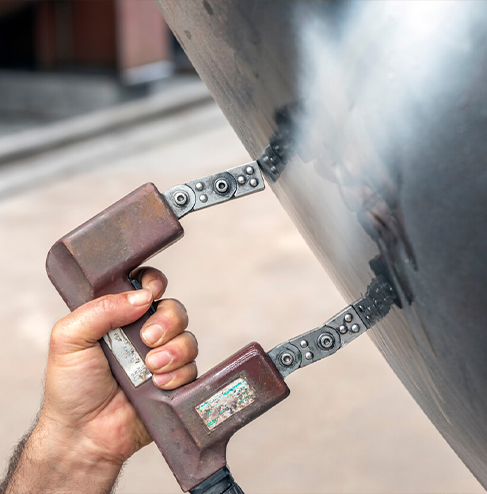
Magnetic Flux Leakage (MFL) testing is a pivotal non-destructive testing (NDT) technique designed to identify surface and subsurface defects in ferromagnetic materials. Widely utilized in industries such as oil and gas, transportation, and manufacturing, MFL testing enhances safety and reliability by effectively detecting surface cracks and irregularities that could lead to equipment failure. In a world where precision and safety are paramount, understanding the intricacies of MFL testing is crucial for organizations aiming to maintain the structural integrity of their assets.
Understanding Magnetic Flux Leakage Testing
Magnetic Flux Leakage testing operates on the premise of magnetizing a ferromagnetic material and then scanning it for magnetic leakage fields that indicate the presence of anomalies such as cracks or corrosion. The process is highly effective for inspecting pipelines, storage tanks, and other vital infrastructure components.
- Principle of Operation: MFL testing detects defects by identifying distortions in the magnetic field caused by irregularities on or below the surface of the material.
- Equipment Used: The technique utilizes a magnetizing apparatus and sensor to detect leakage fields, which are then analyzed to ascertain the presence and extent of defects.
- Materials Tested: Primarily applied to ferromagnetic materials, such as iron and steel, due to their conducive nature for magnetic field applications.
Advantages of Magnetic Flux Leakage Testing
Magnetic Flux Leakage testing offers several benefits that make it an invaluable tool in the field of NDT.
- Non-Invasive and Safe: As a non-destructive method, MFL testing does not require any material removal, ensuring the integrity of the structure remains intact.
- Efficiency and Speed: The process is relatively quick, allowing for large areas to be inspected in a short period.
- Cost-Effective: By preventing potential failures through early detection, MFL testing can lead to significant cost savings in maintenance and repairs.
- Versatility: Suitable for both flat and curved surfaces, MFL testing can be adapted to various structural forms and sizes.
To explore advanced guides and tips on implementing this method, find out more about this approach.
Applications of MFL Testing
The applications of Magnetic Flux Leakage testing are extensive, particularly in industries where safety and reliability are critical.
Oil and Gas Industry
In the oil and gas sector, MFL testing is indispensable for inspecting pipelines and storage tanks. Detecting cracks or corrosion early is vital to prevent potential leaks and environmental hazards. Discover expert strategies here for optimizing inspection processes in this field.
Transportation and Infrastructure
Ensuring the safety of bridges, railways, and other transportation infrastructure involves regular inspections using MFL testing. The technique is useful for monitoring wear and tear over time, thereby enhancing public safety.
Manufacturing Processes
In manufacturing, MFL testing assists in quality control by ensuring that materials and components are free from defects that could compromise performance. Learn about our tailored solutions to maintain high standards in manufacturing.
Challenges and Considerations
While MFL testing is highly effective, certain challenges and considerations must be acknowledged to maximize its benefits.
- Surface Preparation: The presence of rust or paint can affect the accuracy of MFL results, necessitating surface cleaning before testing.
- Calibration and Sensitivity: Proper calibration of equipment is crucial to ensure sensitivity to small defects.
- Operator Expertise: Skilled operators are essential for accurate interpretation of results and ensuring reliable detection of defects.
For those seeking to optimize their non-destructive testing strategies, explore advanced guides and tips to enhance detection capabilities and improve safety outcomes.
In conclusion, Magnetic Flux Leakage testing stands as a cornerstone in the field of non-destructive testing, offering precise detection of surface cracks and enhancing the safety of critical infrastructure. By understanding its principles, applications, and challenges, industries can leverage this technique to ensure the integrity and longevity of their assets.