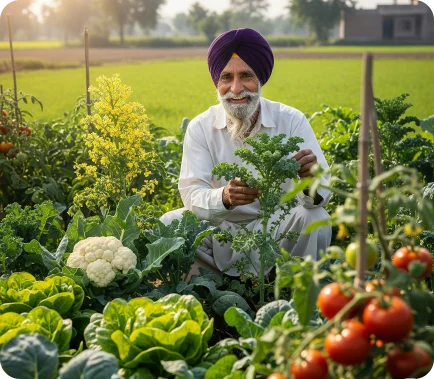
Sustainable farming practices are crucial to ensuring the long-term viability of agriculture, promoting environmental health, and producing eco-friendly produce. As the global population continues to grow, the demand for food increases, necessitating methods that not only boost productivity but also safeguard the environment. By adopting sustainable practices, farmers can reduce their ecological footprint, enhance soil health, and improve the overall quality of their produce. This article delves into various sustainable farming practices that contribute to eco-friendly produce, offering insights into how these methods are implemented and their benefits.
Conservation Tillage
Conservation tillage is a farming practice that minimizes soil disturbance, helping to maintain its structure and fertility. This method involves:
- Reducing the frequency and intensity of tilling.
- Leaving crop residues on the field to protect the soil surface.
- Improving water infiltration and retention.
By adopting conservation tillage, farmers can significantly reduce soil erosion and enhance carbon sequestration. Learn more in this detailed guide.
Crop Rotation and Diversity
Crop rotation and diversity play a vital role in sustainable farming by:
- Breaking pest and disease cycles.
- Improving soil fertility and structure.
- Enhancing biodiversity on farms.
Rotating different crops over seasons helps in maintaining soil nutrient balance and reduces the reliance on chemical fertilizers. Find additional information here.
Agroforestry
Agroforestry combines agriculture and forestry to create more productive and sustainable land-use systems. Key benefits of this practice include:
- Improved biodiversity through the introduction of various tree and plant species.
- Enhanced water management and reduced soil erosion.
- Increased carbon storage, contributing to climate change mitigation.
This integrated approach not only boosts farm productivity but also provides habitat for wildlife, supporting ecological balance. Explore further insights here.
Integrated Pest Management (IPM)
Integrated Pest Management is a holistic approach to managing pests in an environmentally sustainable way. It involves:
- Monitoring pest populations and applying control methods only when necessary.
- Using biological control agents like beneficial insects.
- Implementing cultural practices to prevent pest infestations.
IPM reduces the need for chemical pesticides, thereby minimizing environmental impact and enhancing food safety. Read more about this topic.
Organic Farming
Organic farming emphasizes the use of natural inputs and processes to produce food. This approach focuses on:
- Eliminating synthetic fertilizers and pesticides.
- Promoting soil health through organic matter enhancement.
- Encouraging biodiversity and ecological balance.
By adhering to organic farming principles, farmers can produce high-quality, eco-friendly produce while maintaining environmental integrity. Learn more in this detailed guide.
Water Conservation Techniques
Efficient water use is essential for sustainable farming. Techniques include:
- Drip irrigation systems to minimize water wastage.
- Rainwater harvesting for supplementary irrigation.
- Mulching to retain soil moisture.
These practices help conserve water, ensuring its availability for future generations and reducing the environmental impact of farming. Explore further insights here.
Conclusion
Sustainable farming practices are key to producing eco-friendly produce while preserving the environment for future generations. By implementing methods such as conservation tillage, crop rotation, agroforestry, and integrated pest management, farmers can reduce their ecological impact and enhance the quality of their produce. As the demand for sustainable practices grows, embracing these methods will be vital for the agricultural sector’s continued success. Find additional information here.